Last updated November 20, 2026
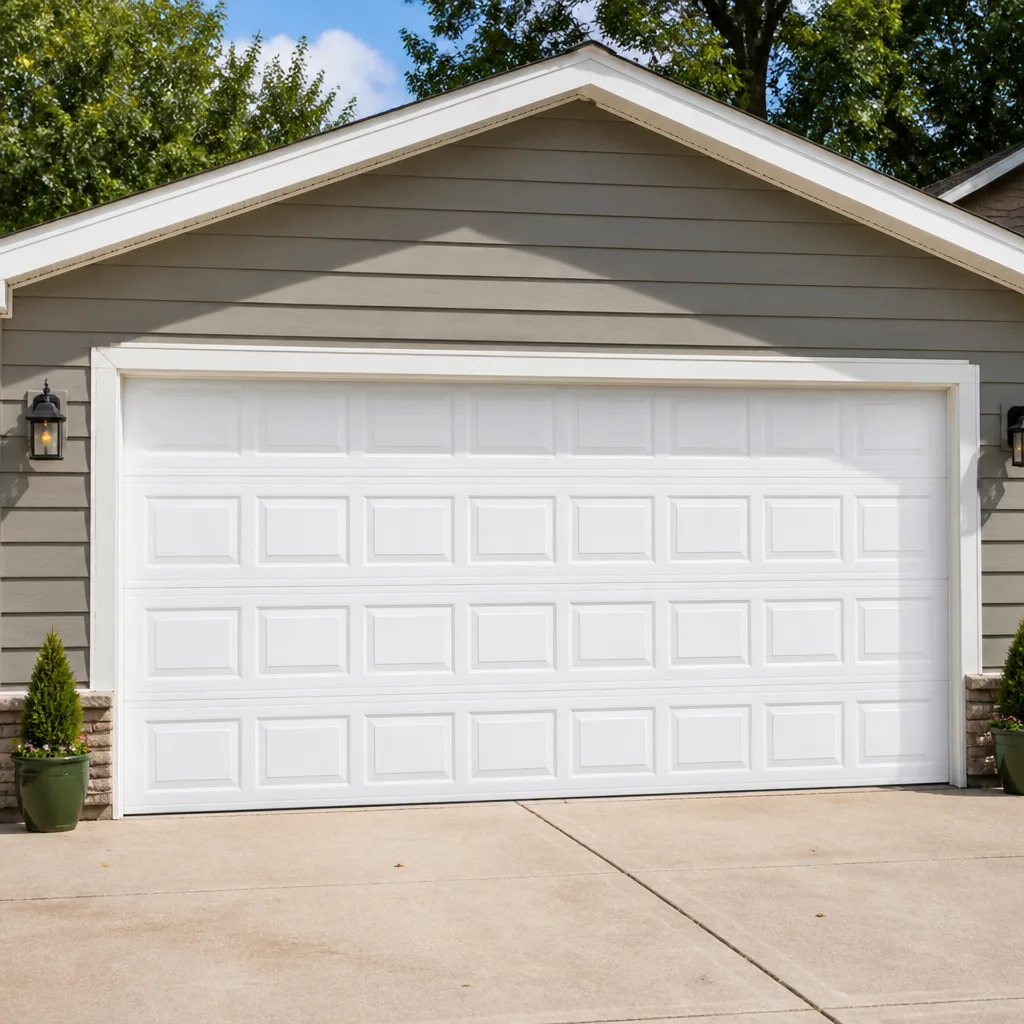 Raised-panel steel
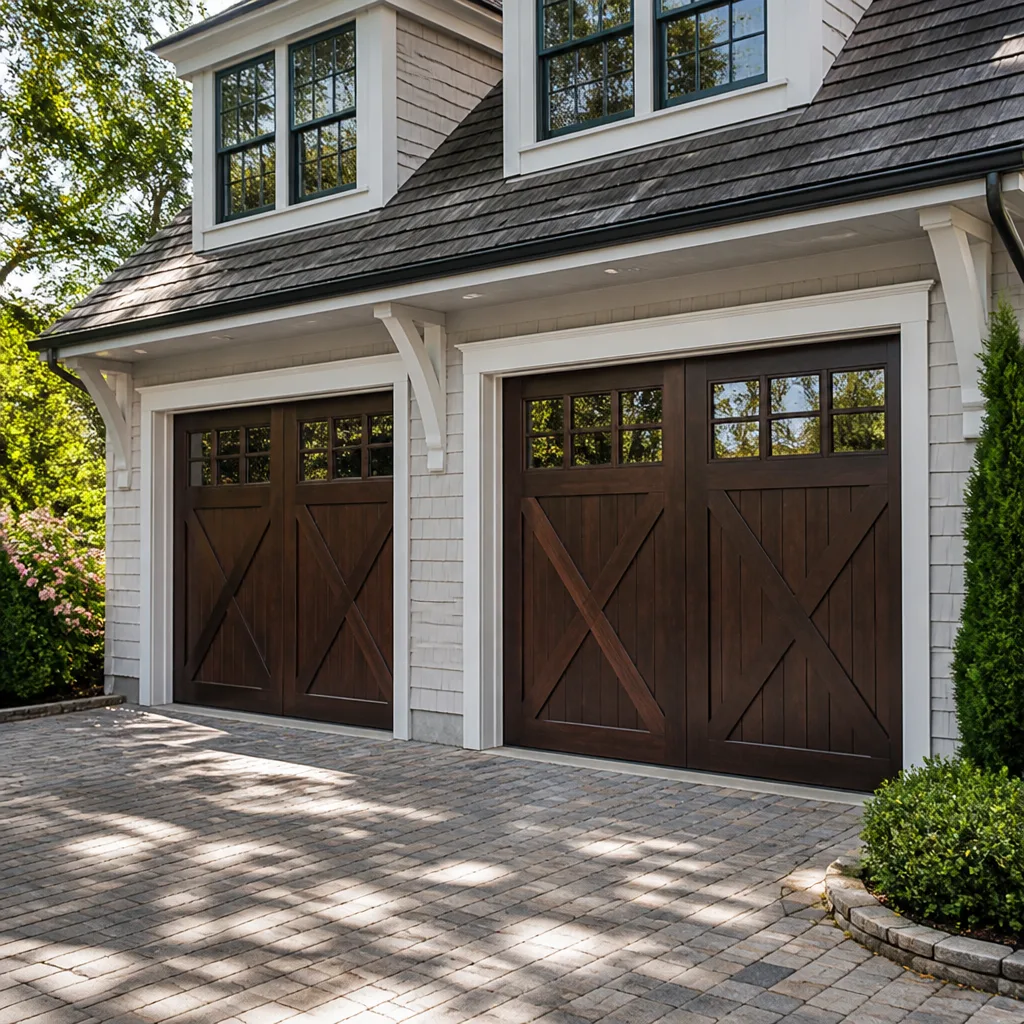 Carriage house
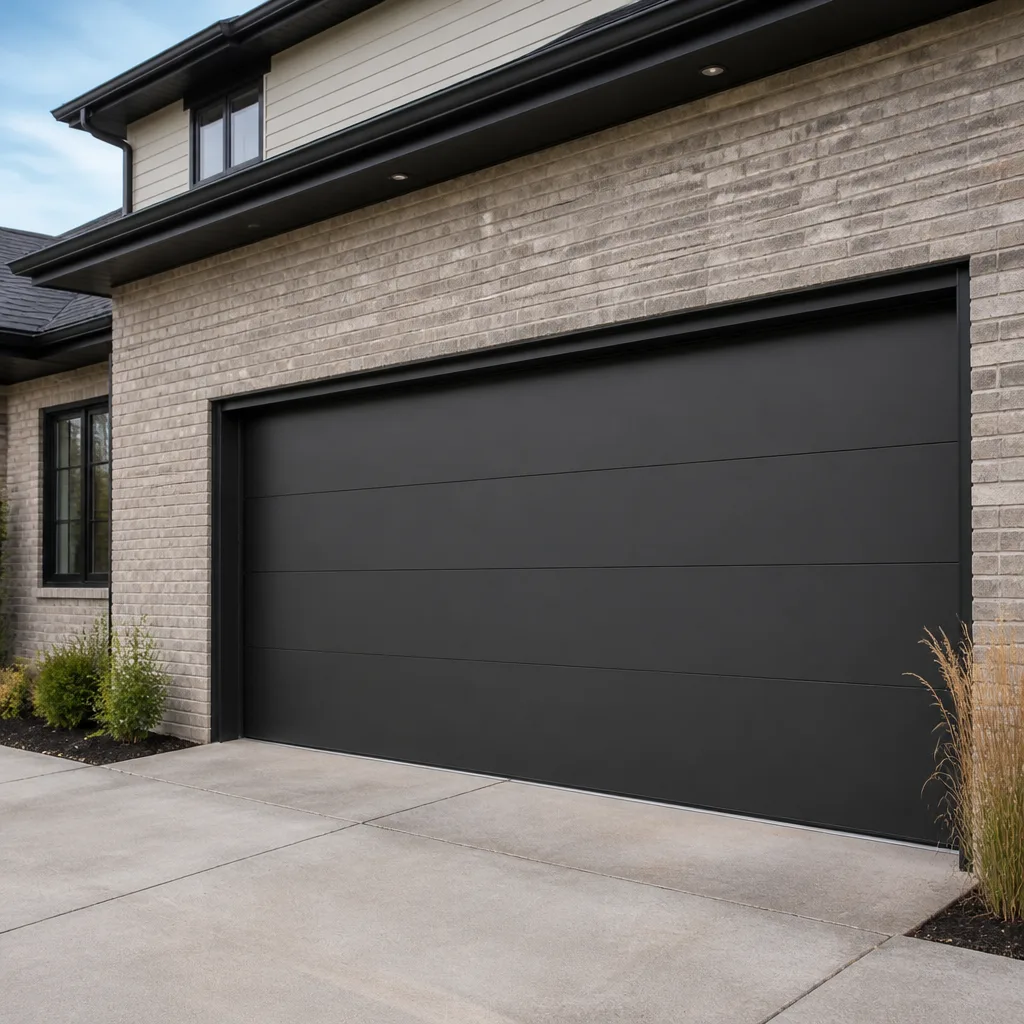 Modern flush
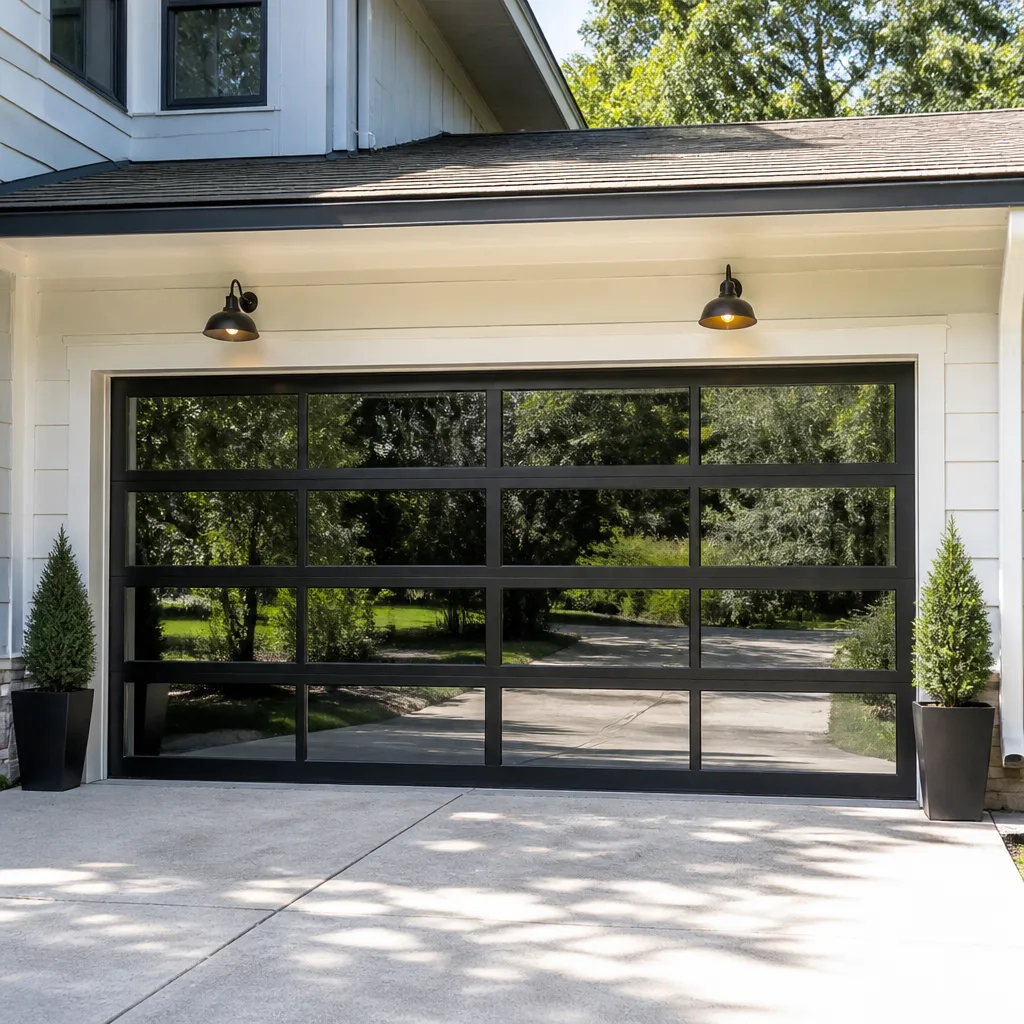 Full-view glass
 LiftMaster openers
 Chamberlain openers
Full 25-point door and opener safety check with every visit - springs, cables, rollers, tracks, and your LiftMaster or Chamberlain opener included
You get a price before we start. It does not change when the pro arrives.
Get your free estimateGarage Door Warning Signs: A Westlake Homeowner’s Reference Guide
A garage door that hesitates for half a second before it moves isn’t “just old.” That pause is a measurable symptom. It points to one of four specific mechanical causes, and each one carries a different urgency level and a different repair cost. Most homeowners normalize the sounds and small movements that show up weeks before a door fails, then treat the eventual break as sudden. It rarely is. This guide names each warning sign precisely, connects it to the component behind it, and helps you sort the ones that can wait from the ones that need attention today. You’ll learn what grinding, squealing, popping, and rattling each tend to mean, how to read uneven movement in Westlake’s freeze-thaw winters, and when a call beats a wait.
Quick Answer
The most common garage door warning signs are grinding, squealing, popping, or rattling sounds, uneven or jerky movement, a door that reverses partway down, and slow opener response. Each points to a specific component: rollers, springs, cables, tracks, or the opener itself. A popped or snapped spring and a visibly fraying cable are same-day problems, while a squeak or a slightly noisy roller is usually a scheduled repair.
Styles & brands we work with
- Raised-panel steel
- Carriage house
- Modern flush
- Full-view glass
- LiftMaster openers
- Chamberlain openers
Table of Contents
- The sound-based diagnostic index
- Visual asymmetry: reading uneven tension and sag
- Opener behavior flags and what each one suggests
- The 30 to 60 day warning window before a spring breaks
- Urgency triage: same-day, scheduled, or watch
- How Westlake conditions accelerate wear
- What brand-specific warning signs tell you
- A monthly two-minute check that prevents most failures
The Sound-Based Diagnostic Index
Sound is the earliest and most reliable signal a garage door gives you. The trick is that different noises come from different parts, and lumping them together as “the door is loud” hides which component is failing. Here’s how we map the four main sounds to their likely source.
- Grinding usually comes from worn or dry rollers, a bent track, or debris packed into the track channel. Grinding is metal-on-metal, so it tends to get worse fast.
- Squealing points to a lubrication or bearing problem: dry hinges, dry rollers, or a torsion tube that needs attention. Squealing is often the least urgent sound but the easiest to fix early.
- Popping is the one to take seriously. A sharp pop often means a torsion spring is winding down or a cable has slipped a drum. A loud bang followed by a door that won’t lift means a spring has already snapped.
- Rattling usually traces to loose bolts, a sagging panel, or a loose chain on a chain-drive opener. It’s rarely dangerous on its own but often signals something working loose.
In our experience, the pattern that catches people off guard is popping that starts slow and intermittent. A spring doesn’t usually break without weeks of complaining first. It loses tension gradually, and the pop is the metal telling you it’s under uneven load. If you hear popping in a Westlake home, treat it as a prompt to get the door looked at rather than background noise.
How to trace a sound to its source
- Stand in the garage with the door closed and listen as someone operates it. Sound location matters more than volume.
- Note whether the noise happens during lift, during lowering, or both. Lift-only noises point toward springs and cables; both-ways noises point toward rollers and tracks.
- Check the source with the door closed and the power off before you touch anything. Never put your hands near a cable or spring that’s under tension.
- Write down the sound, the timing, and where it comes from. That description is what a technician needs to bring the right parts.
If a sound is new and paired with a movement change, that combination is more telling than the sound alone. That’s where the next section comes in.
Visual Asymmetry: Reading Uneven Tension and Sag
Sound tells you something is wrong. Movement tells you how wrong. A properly working door lifts evenly, sits level in the frame, and closes with a steady, quiet travel. When it doesn’t, you’re reading a mechanical imbalance that has a specific cause. These are the visual indicators worth checking in any Westlake garage, especially after a cold snap.
- A door that rises on one side first. This usually means uneven cable tension. One cable is taking more load than the other, which puts twisting force on the panels and the torsion system.
- A visible gap on one side when closed. A crooked door that doesn’t meet the floor evenly is a cable or spring balance problem, not a track problem, in most cases.
- A sagging top or middle section. A bowed panel often traces to a broken spring on one side of a two-spring system, or to a bent track pulling the door out of alignment.
- Frayed or slack cables. A cable that looks fuzzy, kinked, or loose is a serious safety issue. Cables are under heavy tension and can snap without warning.
- Tracks that bow inward or outward. A bent track will drag the rollers and eventually bind the door. Small bends are cheap to correct; a door that jumps the track is not.
Uneven cable tension is the one we’d flag hardest. It’s easy to see and easy to dismiss, and it’s a direct contributor to panel failure because the door twists as it travels. A twisted door can crack a panel or pull a hinge loose. Once that happens you’re looking at panel replacement rather than a cable adjustment.
What to look at, and what to leave alone
Run your eyes along the cables, the springs, and the track. Look for slack, fraying, and bends. That’s the safe visual check. What you shouldn’t do is try to adjust a cable or spring yourself. Those parts carry enough stored energy to cause serious injury, and a mistake there is worse than the original problem. If you see fraying or slack, stop using the door and call for service.
In Westlake, our winters swing between freeze and thaw, and that cycle works on the door’s metal and the garage’s framing. Cables that were fine in October can show tension changes by January. It’s worth a look after the first hard freeze each year.
Opener Behavior Flags and What Each One Suggests
The opener is the easiest component to blame and the hardest to diagnose by feel alone. A door that won’t open could be a dead opener, a snapped spring, a misaligned safety sensor, or a stripped gear inside the unit. Each has a different fix. Knowing your opener, not just openers in general, is how you avoid paying for the wrong repair. Here’s how the common behavior flags sort out.
- Slow response to the wall button or remote. Often a failing logic board, a weak remote battery, or a signal interference issue. If the wall button works but the remote doesn’t, the problem is usually the remote or the receiver, not the motor.
- The door starts down, then reverses partway. This is usually a safety sensor misalignment or an obstruction the sensor sees. It can also point to a binding door that the opener reads as resistance.
- The opener runs but the door doesn’t move. A stripped drive gear or a broken spring. If the motor hums and the door stays put, suspect the spring first and the gear second.
- Inconsistent behavior between wall button and remote. When one works and the other doesn’t, the fault is in the control path, not the door mechanism. This is a diagnostic clue, not a guess.
- Random opening or closing. Often a stuck button, a neighbor’s remote on the same frequency, or a failing receiver. This is a security concern as much as a mechanical one.
Modern openers add another layer. WiFi-enabled and MyQ-compatible units can throw status codes or app alerts that point straight at the fault. If your opener reports a problem in the app, that’s useful information. We work on the brand you already have, so a LiftMaster, Chamberlain, Genie, or Craftsman unit gets a diagnosis matched to its own platform rather than a generic reset.
A quick opener self-check you can do safely
- Test the wall button first. If it works and the remote doesn’t, you’ve narrowed it to the remote or receiver.
- Check the safety sensors at the bottom of the track. Wipe the lenses and confirm the indicator light is solid, not blinking.
- Disconnect the opener with the manual release and lift the door by hand. If it’s heavy or won’t stay up, the spring is the likely fault, not the opener.
- Listen at the opener head. A hum with no movement is different from silence, and each points to a different part.
If the manual release shows the door is heavy, don’t reconnect and keep cycling it. That’s the spring telling you it’s done. A description of these steps is enough for a technician to know what to bring; the repair itself is a job for someone with the right tools.
The 30 to 60 Day Warning Window Before a Spring Breaks
Torsion springs almost never fail without notice. They give you a window, usually somewhere in the 30 to 60 days before they break, and that window is where most preventable damage happens. The signs are subtle but consistent. Catching them turns a snapped-spring emergency into a planned repair.
- A door that feels heavier than it used to. As the spring loses tension, the door gets harder to lift by hand. If you’ve disconnected the opener and the door feels like it’s fighting you, the spring is weakening.
- A door that closes too fast or slams. A weak spring can’t cushion the descent, so the door drops harder than it should. This is a load-balance sign.
- Intermittent popping or a single loud snap during operation. This is the sound of a spring unwinding unevenly. It’s often the last warning before a break.
- A visible gap in the spring coil. A spring with a separation in the windings has lost tension. Look at the coil with the door closed and the power off; don’t touch it.
- The door won’t stay open when you lift it halfway. A balanced door holds position. One that sags back down is out of balance, usually because a spring is giving up.
Spring repair is high-tension work, and a lot of general handymen either decline it or handle it without the right equipment. In our experience, the homeowners who avoid the worst outcomes are the ones who call when the door starts feeling heavy, not after the bang. If your door shows any of these signs, stop cycling it. When the spring finally breaks, the door can drop, and if it’s mid-travel when it lets go, it can damage panels, tracks, and the opener.
Springs fail more often in cold weather because the metal gets less forgiving, and Westlake gets its share of hard cold. A spring that’s near the end of its life often breaks on the first cold morning of the season. That’s not bad luck; it’s the load catching up. If a spring is showing weakening signs going into winter, replacing it on your schedule beats replacing it on the coldest morning of the year.
Why one spring at a time isn’t always the answer
Many doors carry a matched pair of springs. When one breaks, the other is usually the same age and under the same load, so it tends to follow. That’s why we usually recommend replacing a matched pair together. A single spring’s price covers one spring; a pair costs about twice that. If you’re weighing the choice, a spring replacement handled as a set saves you a second service visit and a second wait.
Urgency Triage: Same-Day, Scheduled, or Watch
Not every warning sign is an emergency, and treating them all the same either wastes money or invites a real failure. The useful skill is sorting a sign into one of three buckets: same-day, scheduled, or monitor. Here’s how we’d sort the common ones.
Same-day attention
- A loud bang followed by a door that won’t lift (snapped spring).
- A visibly frayed, slack, or snapped cable.
- A door stuck open, or one that won’t close and leaves the home unsecured.
- A door that has jumped its track or is hanging crooked.
- Any sign of a door that could drop without warning.
An inoperable door is a security and safety issue, not a scheduling inconvenience. A door stuck open in Westlake overnight is an open invitation. If the door is stuck or unsafe, our emergency service treats it that way.
Scheduled appointment
- Grinding or squealing that’s getting louder.
- A door that reverses partway down but still closes with the button held.
- Slow opener response or inconsistent remote behavior.
- A single sagging panel or a minor track bend.
- Rattling that has developed over a few weeks.
These are worth a call but can usually wait for a normal appointment. The catch is that they don’t fix themselves, and a grinding roller left alone can wear a track. Scheduling now is about avoiding a bigger repair later.
Monitored watch
- Occasional squeaks that resolve with lubrication.
- Slightly louder operation than last year but no movement change.
- A remote that needs a fresh battery.
Watch items get a quick look and a note. If one of them starts pairing with a movement change, it moves into the scheduled or same-day bucket. The key word is paired. A noise alone is usually minor; a noise plus a movement change is a pattern.
How Westlake Conditions Accelerate Wear
A garage door in Westlake lives a harder life than its owner might expect. The freeze-thaw cycle is the big one. Water gets into small gaps, freezes, expands, and works metal and fasteners loose over a winter. That repeated stress shows up first in cables, hinges, and the track, and it’s why a door that was quiet in fall can be noisy by February. The seasonal temperature swings also change how the springs behave; cold metal is less forgiving, which is why spring failures cluster in the coldest weeks.
Westlake also has a lot of homes with attached garages that see daily use, and daily use is the real wear driver. A door cycled several times a day wears its rollers and springs faster than one that opens twice a week. The homes around Crocker Park and the neighborhoods near the Westlake recreation center see steady commuter traffic, and that shows up in the doors. Add the area’s wind, which can rattle loose panels and push against a door that’s already out of balance, and the case for a monthly check gets stronger.
The good news is that most of this wear is predictable. A door that’s checked after the first freeze and again in spring catches most problems before they become repairs. If you’re weighing the cost of a repair against replacement, our garage door repair team can tell you which makes sense for your door. For openers that are showing their age, we also handle garage door opener repair across the major platforms.
What Brand-Specific Warning Signs Tell You
Not every door and opener ages the same way, and knowing your equipment’s tendencies saves diagnostic time. That’s why we service equipment from eight named brands: LiftMaster, Chamberlain, Genie, Clopay, Amarr, Wayne Dalton, Craftsman, and Raynor. Factory-familiar service means we’re not guessing at proprietary parts. Here’s how the signs read for a few of the most common makes you’ll find in Westlake garages.
- Clopay and Amarr doors. These panels hold up well but can show sag at the hinge line when a spring is losing balance. A bowed panel on one of these is often a signal to check the spring before the panel.
- Wayne Dalton doors. Some models use a torsion system with specific hardware. A popping sound on these warrants a look at the spring hardware, not just the rollers.
- Craftsman openers. These often show slow response or a reversing door when the safety sensors or the logic board are aging. A remote that quits while the wall button still works is a common early flag.
- LiftMaster and Chamberlain openers. WiFi-enabled and MyQ-compatible units often report the fault in the app before the door visibly misbehaves. That status code is a shortcut to the diagnosis.
The point isn’t to memorize your brand’s quirks. It’s to describe what you’re hearing and seeing precisely enough that a technician arrives with the right replacement hardware. Matched parts matter on springs especially: the replacement has to match the door’s weight and size, not just the brand.
A Monthly Two-Minute Check That Prevents Most Failures
Most of the failures this guide describes start small and announce themselves early. A short monthly check catches them at the cheap-to-fix stage. None of these steps ask you to touch a tension spring or a cable; those stay off-limits. Here’s the routine.
- Listen. Run the door up and down once with no music on. Note any new sound and where it comes from.
- Look at the balance. Disconnect the opener with the manual release and lift the door halfway. It should hold. If it sags, the spring is weakening.
- Check the cables. With the door closed, look for fraying, slack, or kinks. Don’t touch; just note.
- Scan the tracks. Look for bends, debris, or loose bolts along both rails.
- Test the sensors. Confirm the safety sensors at the floor have a solid indicator light and are aimed at each other.
- Feel the panels. Run a hand lightly along the panels for dents, cracks, or loose hinges.
If anything turns up, write it down with the date. A log makes a difference when you call, because it separates a new problem from one that’s been developing. When a spring needs replacing, our garage door spring repair service handles it as the high-tension specialty it is, using correct tension tools and hardware matched to your door. For a broader look at what we cover, our Garage Door Repair Westlake page lays out the full range of services.
Common Mistakes to Avoid
- Ignoring the first pop. A single intermittent pop is easy to dismiss, but it’s often the earliest sign of a spring losing tension. Waiting for the bang turns a scheduled repair into a same-day emergency.
- Greasing a grinding track. Lubricant can quiet a grind for a week and then hide a bent track or a worn roller that keeps getting worse. Fix the cause, not the noise.
- Adjusting a spring or cable yourself. These parts store enough energy to cause serious injury, and a mistake there is far worse than the original fault. Leave them to a trained professional.
- Cycling a door that’s off its track. A door that has jumped the track can fall or twist a panel further with each use. Stop using it and call.
- Replacing one spring when the pair is due. A matched pair usually fails together because they share the same age and load. Replacing one and waiting for the second means a second service visit.
- Blaming the opener for a door problem. A heavy door or a binding track makes a healthy opener look bad. Diagnose the door before you replace the unit.
- Skipping the post-freeze check. Westlake’s freeze-thaw cycle works on cables and fasteners all winter. A quick look after the first hard freeze catches problems the warm months hid.
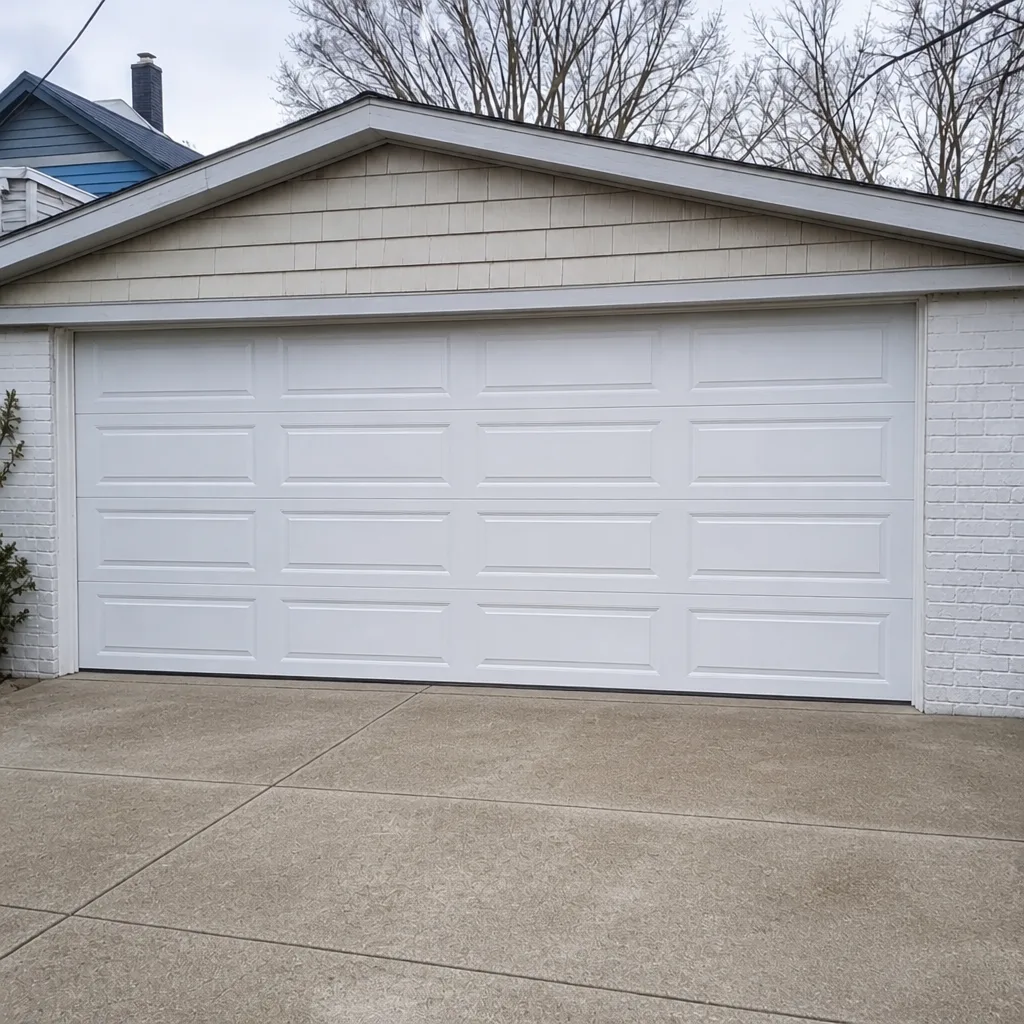
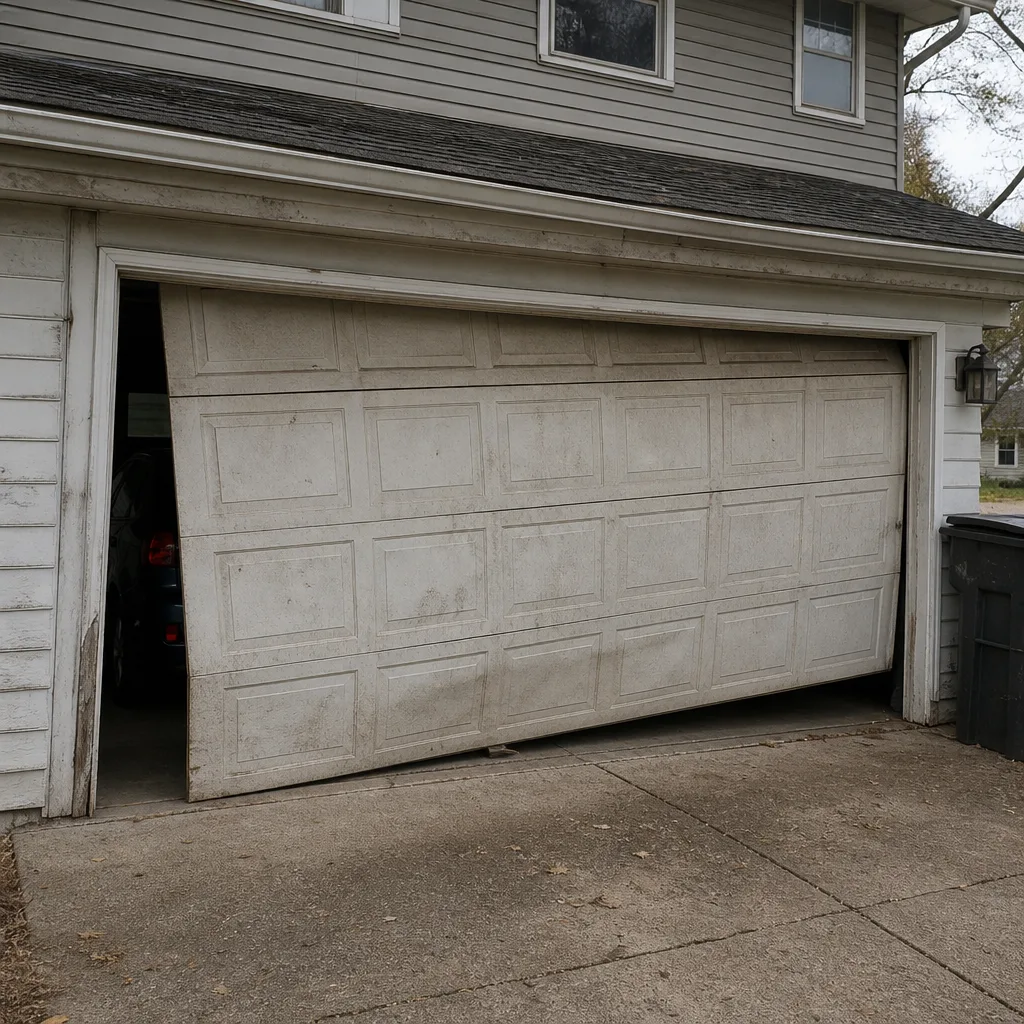
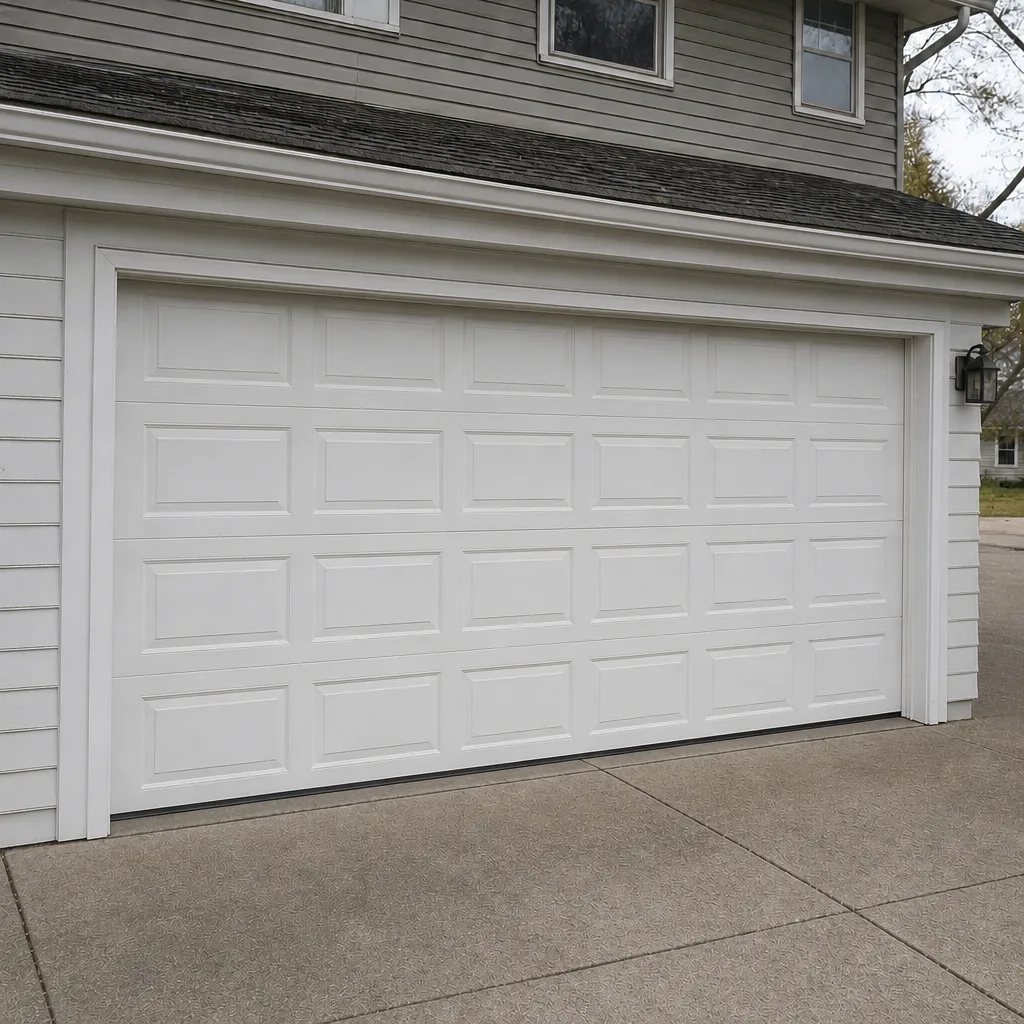
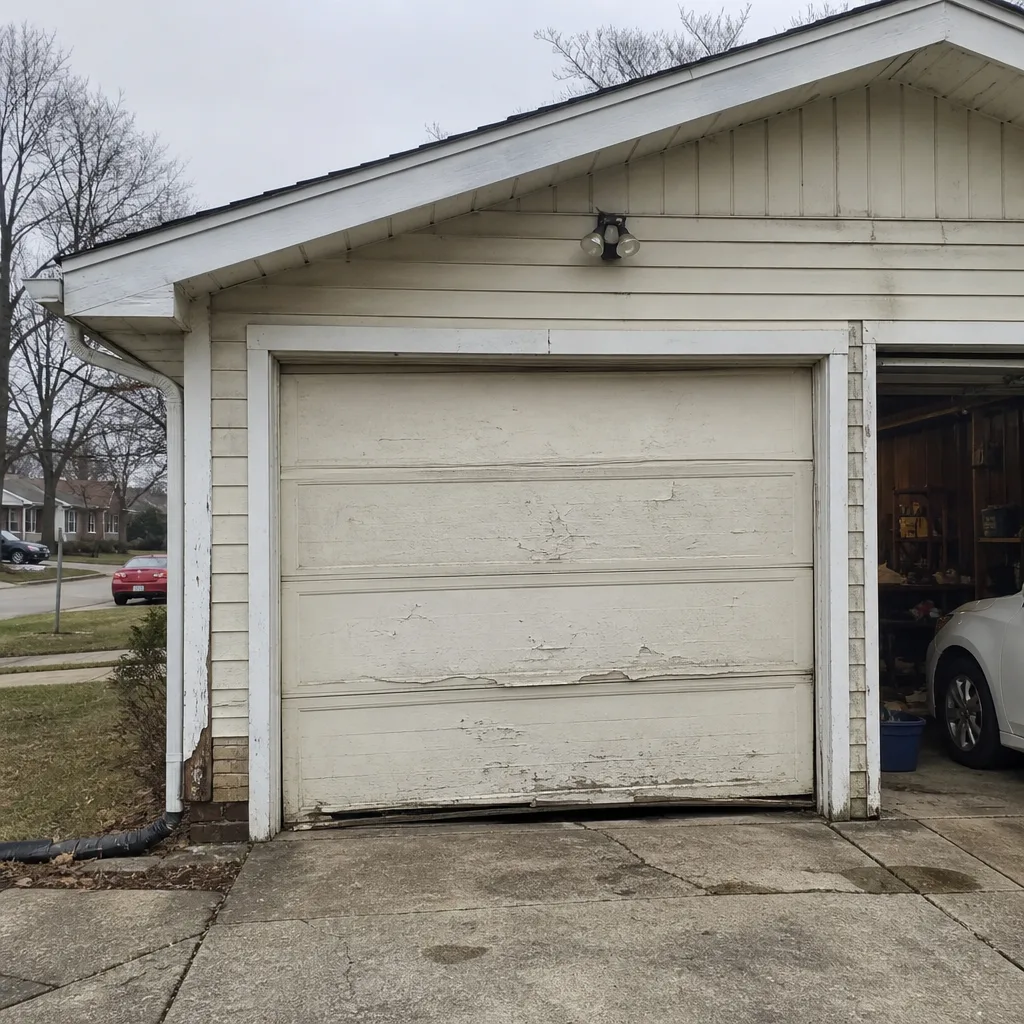
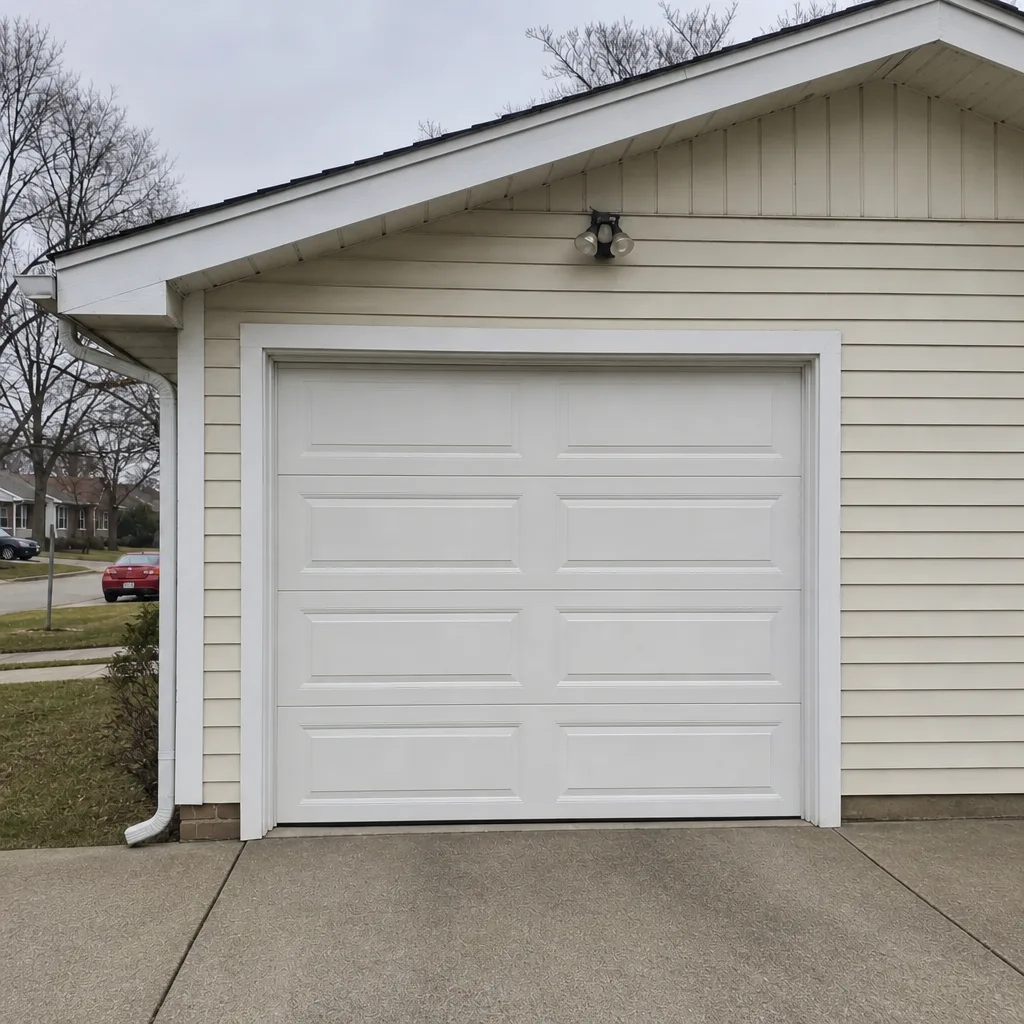
See the difference
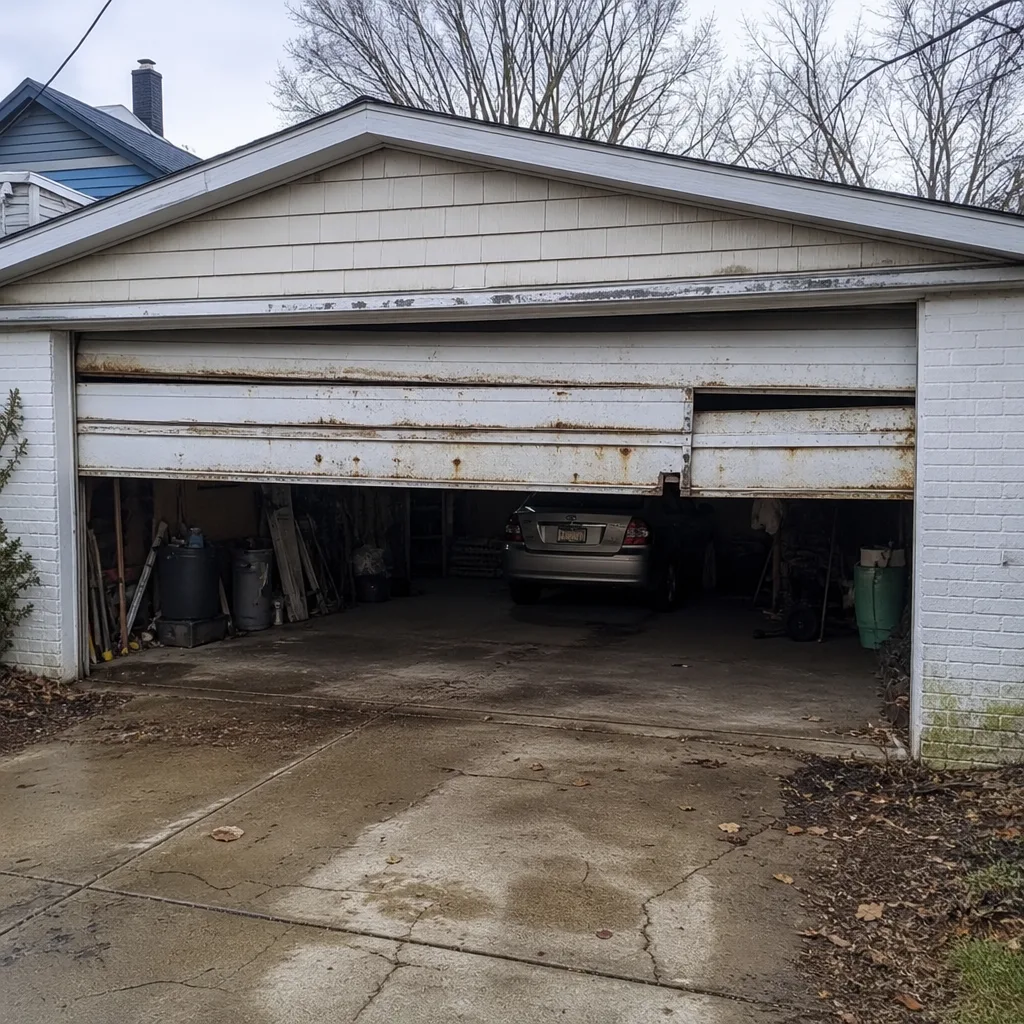 Before
 After
 Before
 After
 Before
 After
When to Call a Professional
Call a professional for anything involving springs, cables, or a door that’s off its track. Those parts carry stored energy and a mistake can cause serious injury. Call the same day if the door is stuck open, hanging crooked, or won’t close and leaves the home unsecured. Schedule an appointment for grinding, a reversing door, slow opener response, or a minor track bend. Watch items like an occasional squeak, but get them checked if they pair with a movement change. We handle the full arc from a broken spring to a brand-new door, so the same conversation covers repair and replacement. Garage Door Repair Westlake offers free estimates in Westlake. Call (833) 962-9341 for an exact quote, and the price is agreed before any work starts.
Frequently Asked Questions
The most common signs are grinding, squealing, popping, or rattling sounds, uneven or jerky movement, a door that reverses partway down, and slow opener response. Each points to a specific component like rollers, springs, cables, tracks, or the opener. Catching them early is the difference between a small repair and an emergency. Call (833) 962-9341 if you’re unsure which one you’re hearing.
A spring that’s close to breaking usually makes the door feel heavier, lets it close too fast, or produces an intermittent pop. You may also see a gap in the spring coil or find the door won’t hold position when lifted halfway. These signs tend to show up in the 30 to 60 days before a break. If you see any of them, stop cycling the door and call (833) 962-9341 for an estimate.
Not always, but some noises are. Squealing from dry rollers is usually minor, while popping or a loud snap often means a spring is failing, which is serious. Grinding can mean a bent track that will eventually bind the door. Match the sound to its source rather than judging by volume. When in doubt, call (833) 962-9341 for a free estimate.
A door that reverses partway down usually has a misaligned or obstructed safety sensor. It can also be a binding door that the opener reads as resistance. Check the sensor lenses at the floor and confirm the indicator light is solid. If the sensors look fine and it still reverses, call (833) 962-9341 and we’ll diagnose it.
No. Springs are under extreme tension and a mistake can cause serious injury. Even many general handymen decline spring work or handle it without the right tools. This is a job for a trained professional using correct tension tools and hardware matched to the door’s weight and size. Call (833) 962-9341 for spring service.
The written estimate sets the final price. We quote and agree on the price before any work starts, so you’re not surprised by the invoice. If the diagnosis turns up something bigger than expected, we tell you before we proceed. Call (833) 962-9341 for a free estimate in Westlake.
The Bottom Line
Garage door failures almost never happen without warning. They announce themselves through sound, movement, and opener behavior weeks before they break. Learn the four sounds and what each points to, watch for uneven tension and sag, and read your opener’s behavior flags. Sort what you find into same-day, scheduled, or watch, and never touch a spring or cable yourself. Our technicians have up to 9 years of experience reading these signs across eight major brands, and we treat an inoperable door as the security issue it is. Call (833) 962-9341 for a free estimate.
Written by the team at Garage Door Repair Westlake.