Last updated November 20, 2026
 Raised-panel steel
 Carriage house
 Modern flush
 Full-view glass
 LiftMaster openers
 Chamberlain openers
Full 25-point door and opener safety check with every visit - springs, cables, rollers, tracks, and your LiftMaster or Chamberlain opener included
You get a price before we start. It does not change when the pro arrives.
Get your free estimateGarage Door Repair Maintenance Checklist for Westlake Homeowners
The call that wakes us up most often isn’t a snapped spring. It’s the result of a small omission that went unnoticed through two Ohio winters until the door finally quit. Most homeowners think garage door care means spraying the tracks and calling it a day. The tracks are rarely the problem. What fails is the stuff nobody looks at: a spring that’s been quietly losing tension since November, a weather seal that’s been letting cold air and moisture into an attached garage, a hinge that stopped holding lubricant because the wrong product was used. This guide walks through what to inspect, in what order, and what a healthy part actually looks like versus one that’s about to fail. Everything here is written for Westlake homes and the specific way our climate wears on garage doors.
Quick Answer
A useful garage door maintenance checklist for Westlake splits tasks into monthly, semi-annual, and annual buckets. Monthly: a visual and listening check of springs, cables, rollers, and the opener’s force response. Semi-annual: lubrication with a cold-rated garage door lubricant (not standard WD-40), weatherstripping inspection, and a balance test. Annual: a full hardware inspection and a professional tune-up if anything looks marginal. The whole routine takes under 15 minutes a month and prevents most of the emergency calls we handle.
Styles & brands we work with
- Raised-panel steel
- Carriage house
- Modern flush
- Full-view glass
- LiftMaster openers
- Chamberlain openers
Table of Contents
- The monthly five-minute inspection
- Lubrication: what to use and what to never use in Ohio winters
- The force-sensitivity test you can do yourself
- Reading a torsion spring before it breaks
- Weatherstripping and Westlake heating costs
- Monthly vs. semi-annual vs. annual: the full schedule
- Cold-weather prep before the first hard freeze
- When a professional inspection is worth it
The Monthly Five-Minute Inspection
Once a month, stand in your garage with the door closed and just look. This isn’t a deep dive – it’s a pattern-recognition exercise. You’re training your eye to spot change, not perfection. A door that looked fine last month and looks slightly different this month is telling you something.
Here’s the monthly routine, in order:
- Walk the perimeter with the door closed. Look at the gap between the door and the floor. Daylight visible under the door means the bottom seal has compressed or torn. In Westlake, that gap is a direct path for cold air into whatever room sits above or beside the garage.
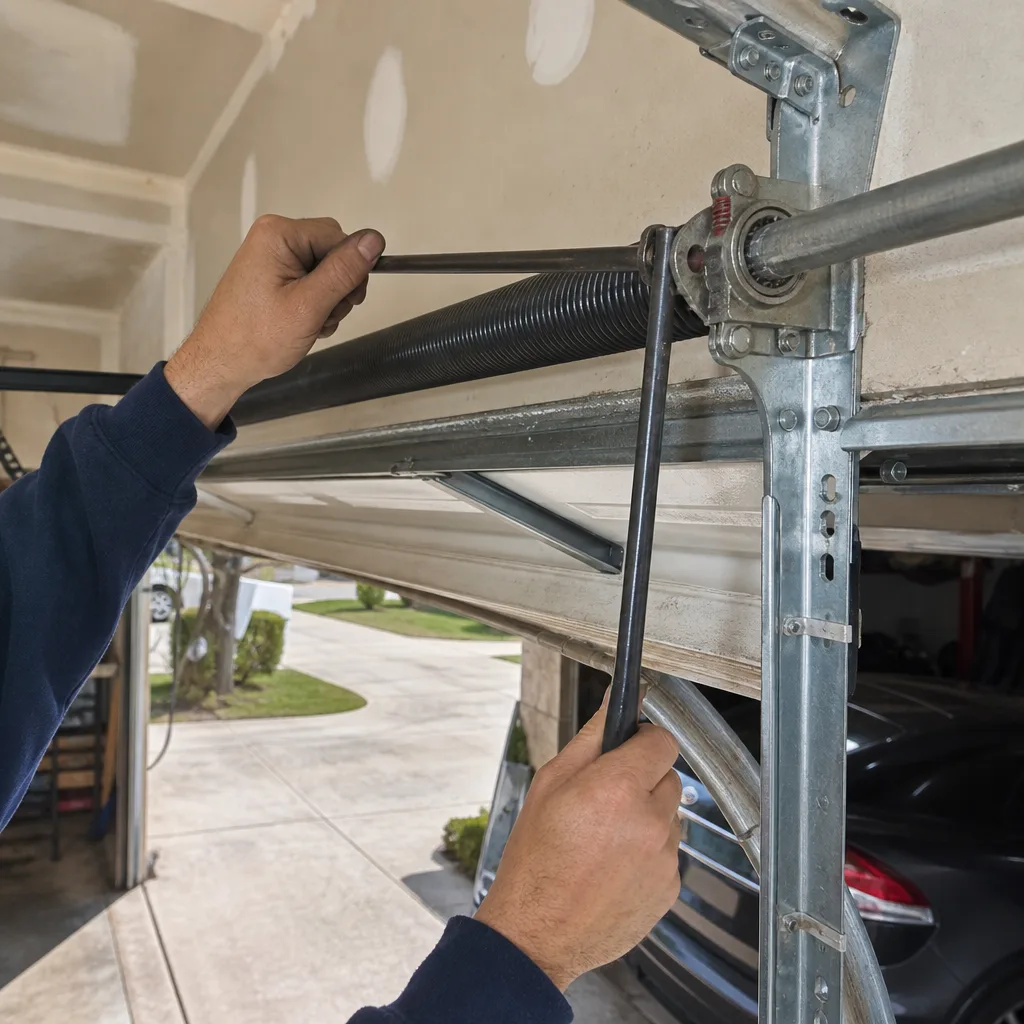
- Look at the springs. Torsion springs sit on a shaft above the door; extension springs run alongside the tracks. Look for gaps, rust streaks, or a spring that’s visibly straighter than it used to be. A healthy torsion spring has a slight, even coil. A tired one looks stretched and discolored in one section.
- Check the cables. Look at both sides where the cables wrap the drums at the top corners. Frayed strands, kinks, or slack are red flags. Do not touch a cable under tension.
- Listen while the door runs. Press the opener and stand back. A healthy door is quiet – a soft hum, a light rattle. Grinding, popping, or a rhythmic scrape means something is out of alignment or a roller is seizing.
- Watch the door’s travel. A door that shudders on the way up, hesitates mid-travel, or speeds up near the top is telling you the opener is compensating for a heavy spot in the system.
- Press the safety reverse. Place a roll of paper towels or a 2×4 flat under the door and close it. The door should reverse on contact. If it doesn’t, stop using the door and get it looked at – this is a safety issue, not a convenience one.
That’s the whole monthly pass. Nothing on that list requires a tool. Most of the problems we diagnose in Westlake homes were visible for weeks before they turned into a service call.
Lubrication: What to Use and What to Never Use in Ohio Winters
Standard WD-40 is the wrong call for a garage door in Westlake. It’s a solvent and light penetrating oil, not a lubricant. It thins out the grease already on the moving parts, attracts dust, and by the time the first freeze hits, the rollers and hinges are running drier than they were before you sprayed them. We see more seized rollers in doors that were “regularly maintained” with the blue can than in doors that were never touched.
Different parts want different products:
- Rollers (steel): A lithium or synthetic grease works, but the cleanest option is a dedicated garage door roller lubricant or white lithium grease applied sparingly to the bearing, not the wheel face. Too much grease attracts grit.
- Rollers (nylon): Most nylon rollers are sealed and need no lubrication at all. Spraying them can actually degrade the housing. If yours are sealed nylon, leave them alone.
- Hinges and pivot points: A silicone-based spray or a light lithium grease on the pin area. A few drops, not a flood.
- Torsion springs and extension springs: This is the part most guides get wrong. Springs need a heavier, cold-rated grease – typically a spray-on lithium or a dedicated spring lubricant designed to stay viscous below freezing. The reason matters: a torsion spring is a stack of coils under enormous tension, and they rub against each other every time the door moves. Without a film between them, they wear and fatigue faster.
- Tracks: Nothing. Tracks should be clean and dry. Lubricating tracks attracts dirt that packs into the roller channel and causes the door to drag. Wipe them with a dry cloth instead.
The reason this matters specifically in Westlake is the temperature swing. An Ohio winter brings repeated freeze-thaw cycles and stretches of single-digit cold. A lubricant that’s fine in October thins in January. Cold-rated products stay put. It’s a small upgrade in effort and a real difference in how the door runs by February.
If you’re not sure what’s already on the door, wipe a hinge clean with a rag and look. Fresh grease tells you the previous owner used something that’s still working. A dry, dusty pin means it’s time to start over.
The Force-Sensitivity Test You Can Actually Do Yourself
Openers from LiftMaster, Chamberlain, and Craftsman have a force-sensitivity setting – a limit on how much resistance the opener will push through before it gives up and reverses. That setting exists to protect fingers, pets, and doors that hit something. It also gives you a diagnostic tool you can run in two minutes.
Here’s how to run the test without touching the programming:
- Disconnect the opener by pulling the emergency release cord (the red handle) with the door closed. The door is now manual.
- Lift the door halfway by hand. It should move with a smooth, even pull – maybe 10 pounds of effort on a properly balanced door. Then hold it there and let go. A balanced door should stay put. A door that sinks is heavy; a door that rises is sprung.
- Raise the door fully, then lower it. Listen and feel for any spot where the effort spikes or drops. A heavy spot in one section of travel usually means a worn roller, a bent track section, or a cable drum out of adjustment.
- Reconnect the opener and run the door. Watch the safety reverse – the same test as the monthly check. If the opener struggles or reverses without contact, the force setting is doing its job, but the underlying resistance is the problem, not the setting.
What the result tells you: a door that stays put and moves smoothly by hand is mechanically sound, and any opener issue is likely in the opener itself. A door that’s noticeably heavier by hand than the opener manages tells you the opener has been compensating for a spring that’s lost tension, a cable stretching, or a track that’s out of square. That’s the pattern behind most of the “my opener quit” calls we take in Westlake. The opener didn’t fail – it was carrying a load it was never sized to handle.
If you open a door manually during this test, always lower it fully before you walk away. Never leave a manual door in a half-raise. And if a spring or cable ever fails while the door is open, do not operate it – see the next section on why.
Reading a Torsion Spring Before It Breaks
A torsion spring breaks with a bang, but it announces itself long before. The failure mode isn’t sudden – it’s cumulative. Every cycle tightens and releases the coil, and the metal slowly fatigues. The signs are visible if you know where to look.
What a torsion spring looks like as it ages:
- A visible gap or uneven coil: Healthy torsion springs have an even coil winding from end to end. A stretched section – usually near the middle – means the spring has lost tension and is close to the end of its life.
- Rust streaks along the coil: Ohio humidity, combined with the condensation that forms on cold steel in a garage, tells on the spring before it fails. Rust on a spring isn’t cosmetic. It’s a sign of thinning metal.
- Paint flaking off in a line: Many springs carry a paint stripe. When the paint starts peeling in a spiral, the spring is cycling against the coating and the metal underneath has started to fatigue.
- Color codes that have faded or changed: Spring color codes indicate the wire gauge and tension. If the color looks inconsistent across the spring, that’s a sign the spring has been painted or replaced inconsistently – worth a professional check.
- The door feels heavier than it did: If the door was easy to lift last winter and requires noticeable effort now, the spring is telling you it will fail soon. Replace it before it fails on a Sunday morning with the car inside.
If you open a door manually during this test, always lower it fully before you walk away. Never leave a manual door in a half-raise. And if a spring or cable ever fails while the door is open, do not operate it – see the next section on why.
One warning, up front: do not adjust, unwind, or replace a torsion spring yourself. The shaft carries hundreds of pounds of stored energy, and the wrong turn of a winding bar can cause serious injury. This is the one part of the checklist where the right move is inspection only. When a spring shows the signs above, that’s a call, not a job. Our garage door spring repair handles this as a dedicated safety specialty, using correct tension tools and hardware matched to the door’s weight and size – and it’s a job many general handymen decline for good reason.
Weatherstripping and Westlake Heating Costs
An attached garage in Westlake is a cold-air reservoir, and the weatherstripping is the only thing standing between that reservoir and the rooms next to it. When the seal fails, the furnace runs harder and the door itself takes on moisture from snowmelt and condensation. It’s the cheapest fix on this list and the one most often skipped.
The failure points to inspect:
- The bottom seal (the rubber astragal): Run your hand along the gap under the closed door. You should feel resistance at every point. If the rubber has flattened, torn, or cracked, cold air moves straight through. In an attached garage, that’s the room above or beside the garage paying the bill.
- The sides and header: These seals run up the jambs and across the top. Look for gaps at the corners where pieces meet, and for the seal pulling away from the frame. Cold air loves a corner.
- The bottom corners of the door panels: Snowmelt tends to pool at the base of the door. Look for rust starting at the bottom edge of a steel panel – if it’s begun, sealing now prevents rot and paint failure later.
- The gap behind the door when it’s down: A 1/8-inch gap around the perimeter is normal compression. A 1/4-inch or larger gap means the seal has gone.
- The door-to-frame fit: If the door rocks in the wind, the seal is compressing unevenly, and the fix may be a door adjustment rather than a new seal.
This is also the moment to inspect the tracks for rust. Ohio’s freeze-thaw cycle means a garage floor that gets wet in January and stays wet stays that way. Rust on the bottom track section, even surface rust, is a sign moisture is getting in and the paint is failing. A quick wipe-down with a dry cloth and a light coating of lubricant on the pivot points (never on the track face) is the fix. If the rust is deep, the track section may need replacement – which is a garage door repair decision, not a cleaning one.
Monthly vs. Semi-Annual vs. Annual: The Full Schedule
A long checklist that gets ignored helps no one. The trick is to split the work into the frequency that matches how fast each part actually wears. Here’s how we’d structure it for a Westlake home.
Monthly (about five minutes, no tools):
- Visual walk of springs, cables, and rollers. Look for change, not perfection.
- Listen to the door on a full open and close cycle.
- Run the safety reverse test with a 2×4 or paper towel roll.
- Check the floor gap for daylight.
Semi-annual (about 30 minutes, every spring and fall):
- Lubricate rollers, hinges, and pivot points with the right product for each part.
- Lubricate torsion and extension springs with a cold-rated grease.
- Wipe down the tracks with a dry cloth. Do not lubricate the track face.
- Run the manual force test. Compare the door’s weight and balance to last time.
- Inspect the bottom seal, side seals, and header seal for cracks, tears, or gaps.
- Look at the inside of the door for rust starting at the bottom edge.
Annual (about an hour, plus a professional call if anything looks marginal):
- Tighten all hinge and bracket bolts. Vibration loosens them over time.
- Inspect the torsion spring for the fatigue signs above – stretched sections, rust, faded paint.
- Check the opener’s mounts and the door’s track alignment with a level.
- Test the safety reverse from a higher position, not just the floor.
- Review the opener’s manual for the photo-eye test and run it.
- If anything looks off, book a professional tune-up before winter.
If a Westlake homeowner only does one thing, it should be the semi-annual lubricant run. The rollers and springs are the parts that fail first, and greasing them twice a year is the single highest-value task on the list.
Cold-Weather Prep Before the First Hard Freeze
Westlake gets a proper winter, and garage doors feel it before the calendar says so. The first hard freeze is the moment of no return for a failing seal or a thin lubricant. Prep happens in October and early November, while the door is still easy to work with and a service call is still a scheduled job rather than an emergency.
The cold-weather routine, in order:
- Re-lubricate with a cold-rated product. Same parts as the semi-annual run, but verify the label says it’s rated for low temperatures. Products that thin below freezing are the reason doors start seizing in January.
- Clear the bottom seal path. Sweep the garage floor where the door meets it. Gravel, salt, and grit trapped under the seal damage the rubber and lift the door off its compression point.
- Check for daylight under the door. If you can see it now, it’s a bigger gap in February when the rubber hardens.
- Inspect the opener’s force setting. Cold stiffens grease and adds resistance. If the opener was marginal in October, it may reverse on its own in a cold snap. Test it by running several full cycles.
- Look at the door panels for moisture damage. Steel doors can rust at the bottom edge; wood doors absorb moisture. Address either before the freeze seals it in.
- Listen for a new noise. A rattle that wasn’t there in September is a loose bolt or a worn roller. Two minutes with a wrench now saves a service call later.
The pattern we see in Westlake every winter is a door that “worked fine last year” that now won’t open on the first cold morning. In nearly every case, the parts had been showing the signs for months. Prep closes that window.
Nylon rollers are the exception to a lot of this – they shrug off cold and don’t need lubrication. If your door has sealed nylon rollers, your winter prep is mostly about seals, tracks, and the opener’s force test.
When a Professional Inspection Is Worth It
Most of this checklist is easy DIY work. Some of it isn’t, and knowing the difference is the point. A pro inspection is worth the call when:
- A spring shows any of the fatigue signs above. Springs are the highest-tension component on the door and the most common cause of emergency calls. Don’t touch them yourself – book a specialist.
- A cable looks frayed, kinked, or loose. A cable failure can whip a door off its track with the opener still running.
- The door is out of balance by hand – heavier, lighter, or uneven than it was last season. That’s a spring, cable, or track issue that compounds.
- The safety reverse doesn’t work, or reverses on its own. Stop using the door until it’s checked.
- The opener struggles, reverses without contact, or has stopped responding to a LiftMaster, Chamberlain, Genie, or Craftsman remote. Programming issues are fixable; force issues may indicate a mechanical problem the opener is masking. Our garage door opener repair covers the full range of drive systems, including Wi-Fi-enabled and MyQ-compatible units.
- A new sound, a new wobble, or a new hesitation appears that wasn’t there last month. Change is the signal, not perfection.
- Your annual inspection finds more than one marginal item. When two or three parts are all slightly off, the door is telling you something systemic is happening – often a spring that’s been quietly losing tension for a season.
A free estimate for anything on that list beats waiting for a failure. We connect Westlake homeowners with local professionals who can look at the door in person and give you a clear read on what’s wear and what’s fine.
Common Mistakes to Avoid
- Using standard WD-40 as a garage door lubricant. It’s a solvent, not a lubricant. It thins out the grease already on the parts, attracts dust, and by the first Westlake freeze the door is running drier than before. Use a cold-rated lithium or silicone product matched to each part.
- Lubricating the tracks. Tracks should stay clean and dry. Greasing them collects dust and grit that packs into the roller channel and drags.
- Ignoring a spring that looks “mostly fine.” Springs don’t fail suddenly – they fail after months of looking off. A stretched section or rust streak is the warning, not the disaster. The disaster is ignoring it.
- Running the opener after a spring breaks. A door with a broken spring is dead weight on the opener. Running it can bend panels, twist the tracks, and burn out the motor. Stop, disconnect the manual release, and call.
- Adjusting the opener’s force setting to compensate for a harder-to-move door. The force setting is a safety limit, not a power booster. Turning it up hides a mechanical problem and defeats the safety reverse.
- Skipping the weatherstripping. It’s the cheapest fix on the list and the one with the most visible effect on a Westlake heating bill and garage moisture.
- Waiting for a “convenient” time to book an inspection. A door that’s marginal in October rarely gets better by December. Book the tune-up before the cold snaps.
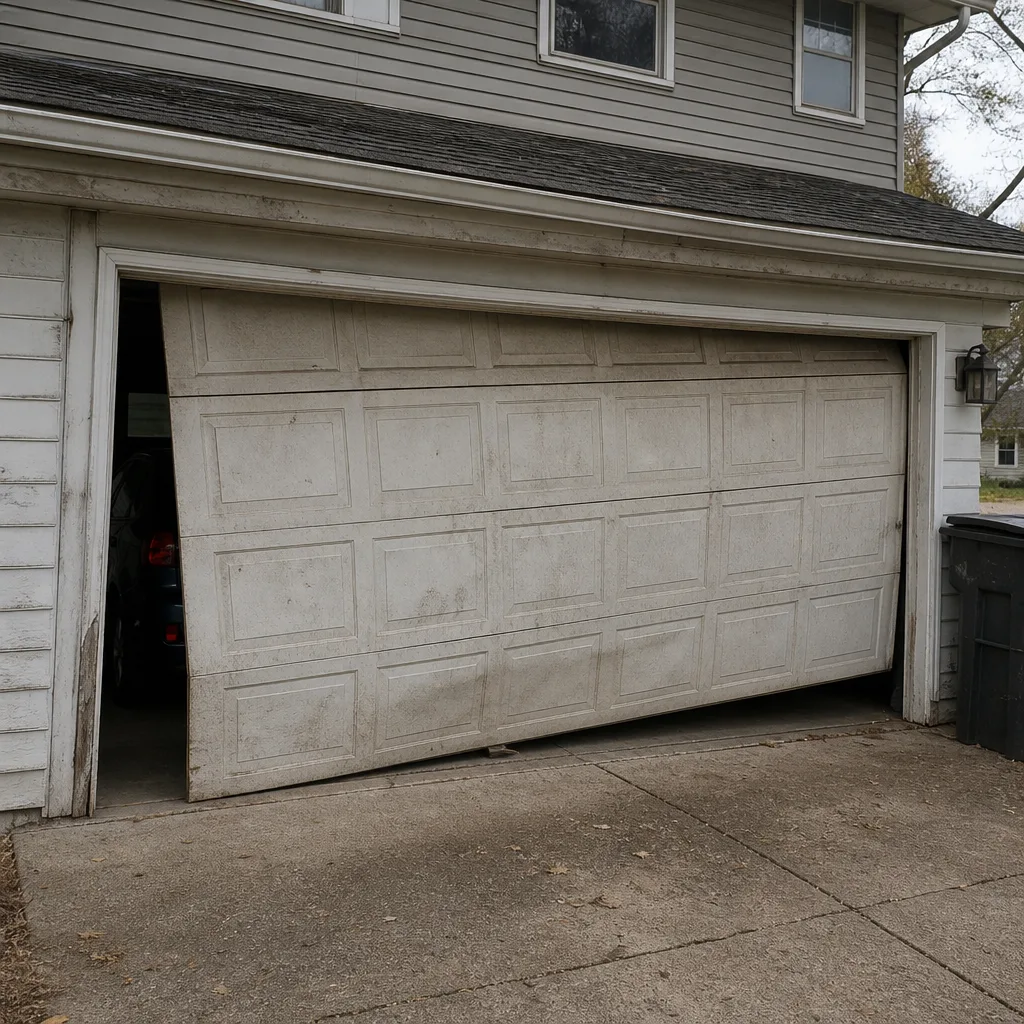
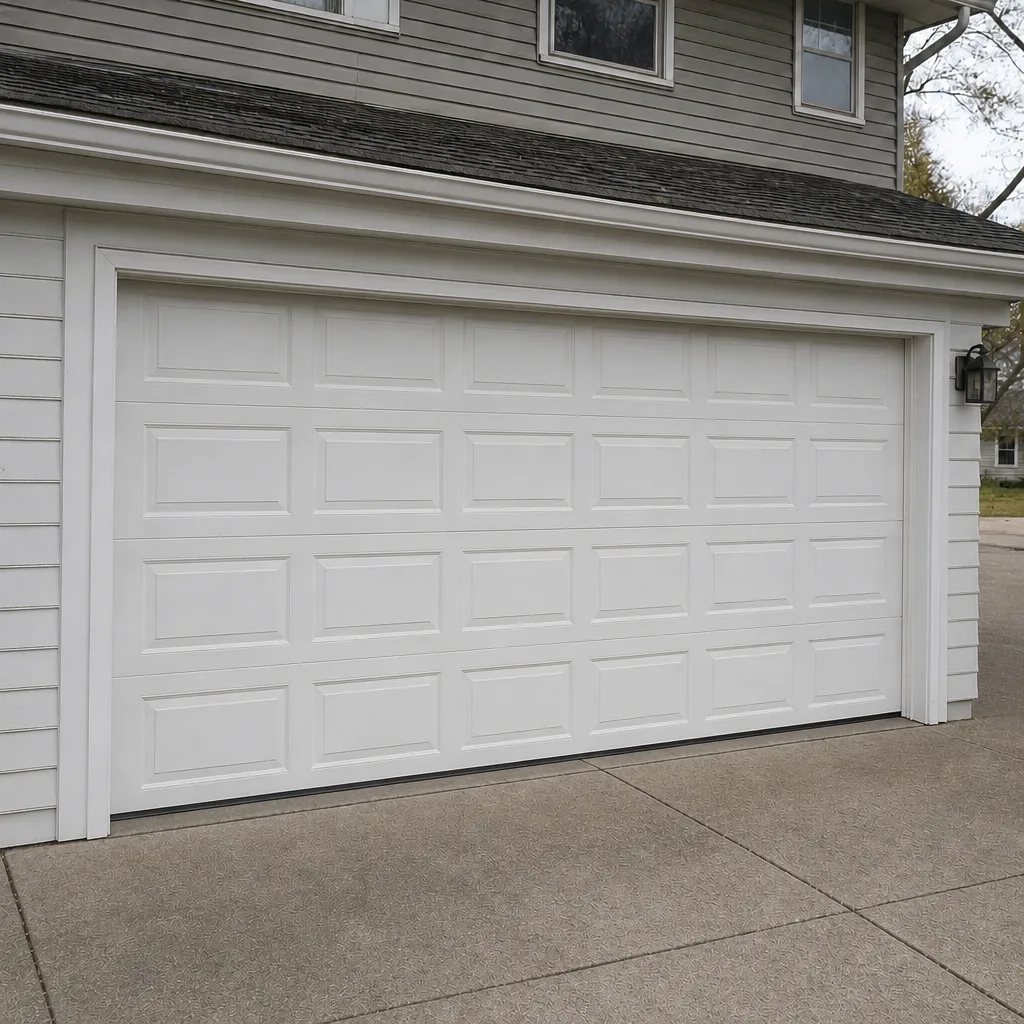
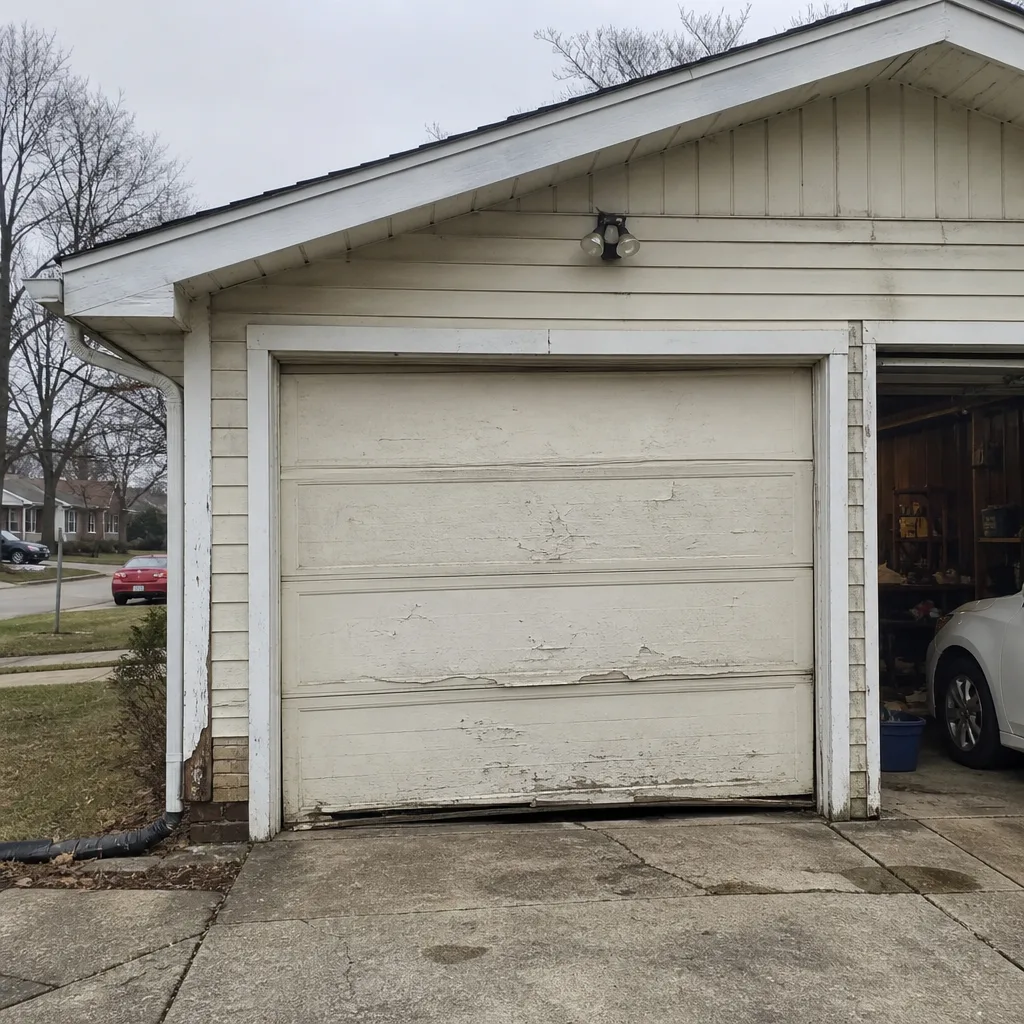
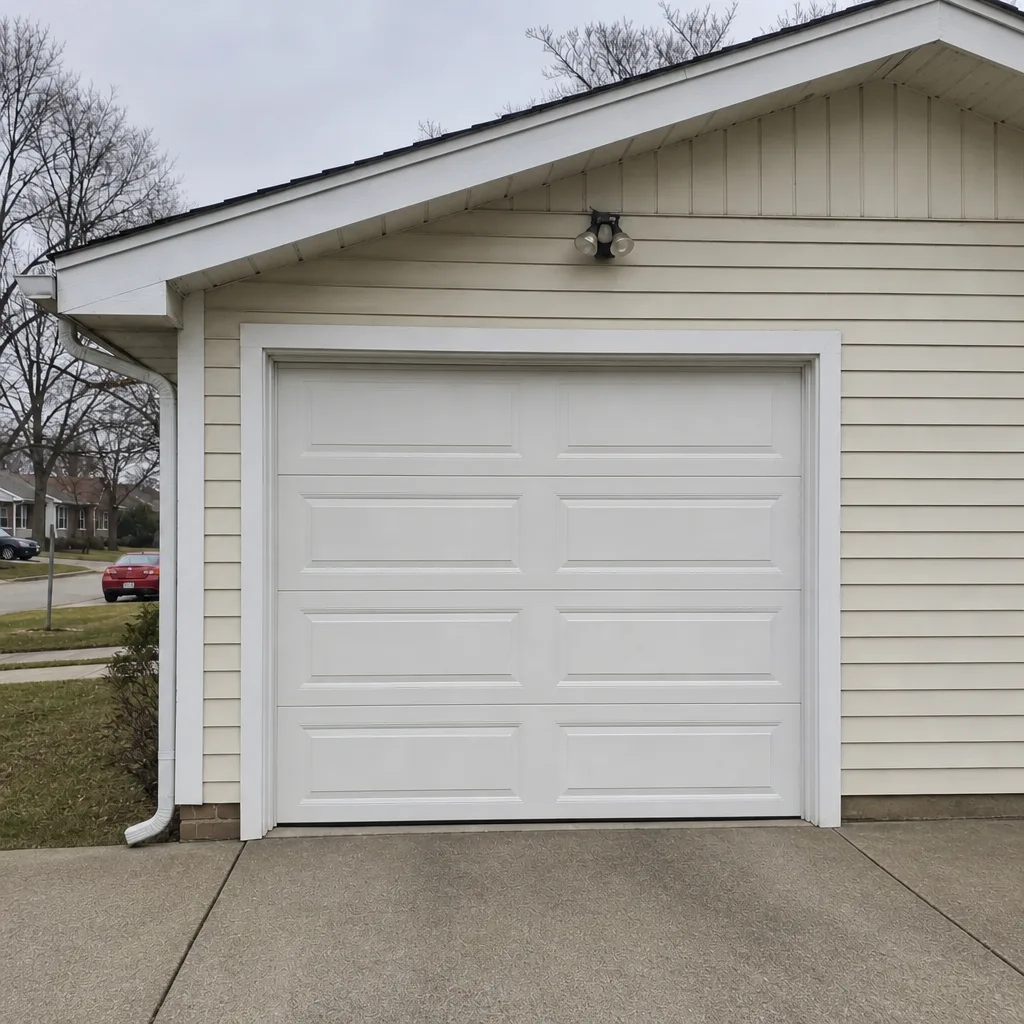
See the difference
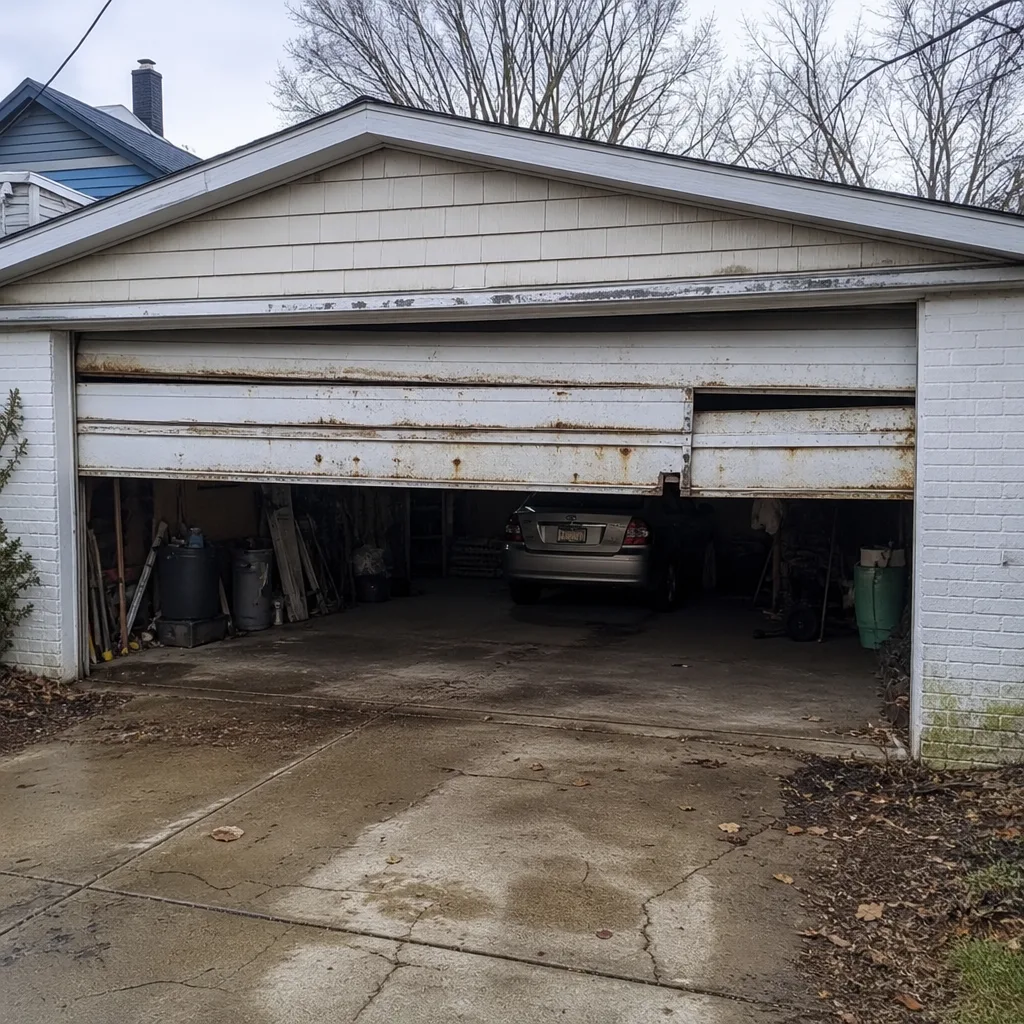 Before
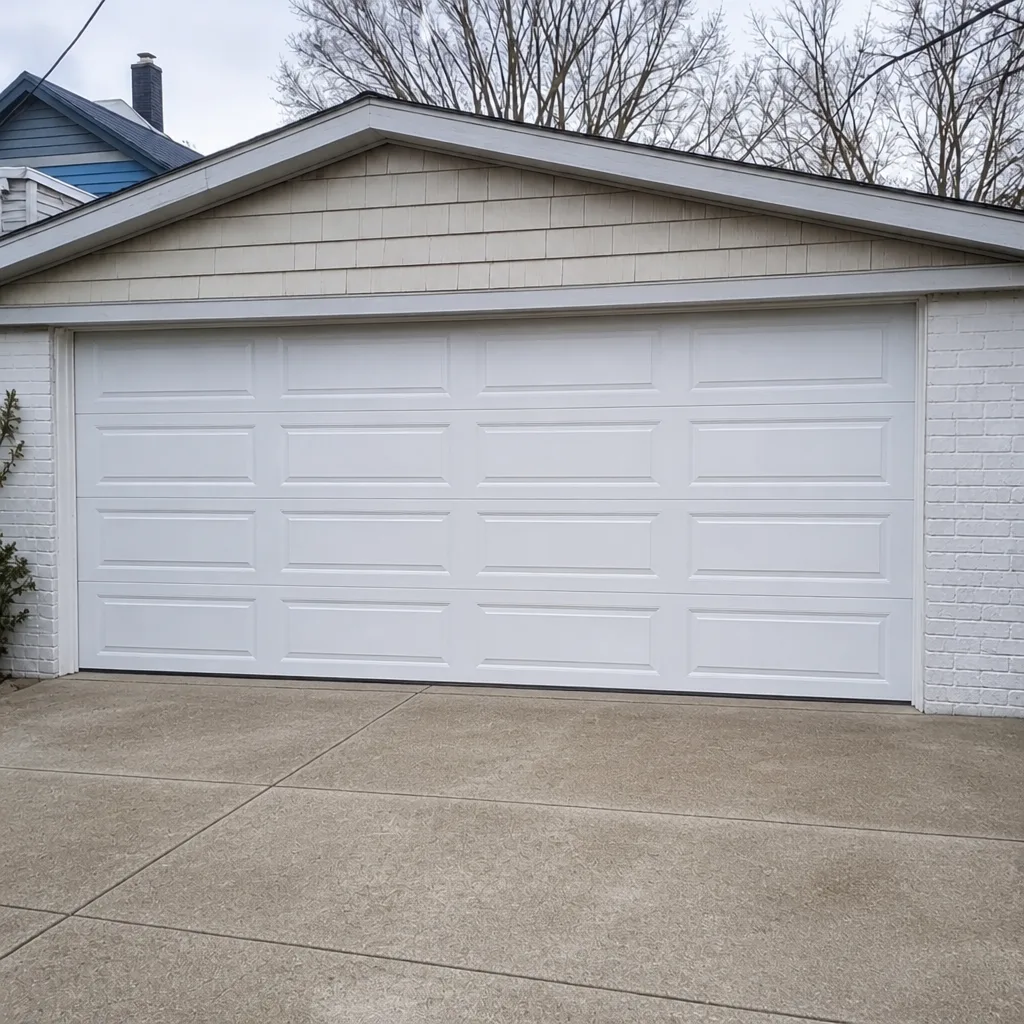 After
 Before
 After
 Before
 After
When to Call a Professional
Anything involving a torsion spring, a cable under tension, or a door that’s off its track is work for a trained technician, not a homeowner with a ladder. The stored energy in those components is real, and the wrong move can cause serious injury. The same goes for electrical work inside an opener, a door that won’t reverse, and any situation where the door is stuck open and the house or business is unsecured. Beyond the safety calls, the professional line is the door that’s showing multiple wear signs at once – two or more marginal parts, a new sound, or a balance test that reads different than it did last season. That’s the door that’s most likely to fail at the worst time. Garage Door Repair Westlake offers free estimates in Westlake – call (833) 962-9341. Our technicians have up to 9 years of experience, and we work on the equipment you already have, whether it’s a LiftMaster opener, a Chamberlain motor, or a Raynor door. From garage door repair to a full replacement, we can point you to the right next step.
Frequently Asked Questions
Twice a year, once in spring and once in fall, is the right rhythm for Westlake’s climate. The fall run matters most because it’s the one that preps the door for the freeze. Use a cold-rated product on springs and hinges, and use nothing on the tracks. Our technicians have up to 9 years of experience and can do the full tune-up in one visit. Call (833) 962-9341 for a free estimate – estimates are always free.
A visible gap or stretched section in the coil, usually near the middle, is the earliest reliable sign. The door also starts feeling heavier when you lift it by hand. Other signs include rust streaks along the coil and paint flaking in a spiral pattern. If you see any of these, call for an inspection rather than waiting for the break. Our garage door spring repair is a dedicated safety specialty, and estimates are free – call (833) 962-9341.
No. Standard WD-40 is a solvent and light penetrating oil, not a garage door lubricant. It thins the grease already on your moving parts and dries out by the time the cold arrives. Use a lithium or silicone product rated for cold temperatures instead, and match the product to the part – rollers want grease on the bearing, springs want a heavier cold-rated grease, tracks want nothing.
Place a roll of paper towels or a flat 2×4 under the closing door and run the opener. The door should reverse on contact. If it doesn’t, stop using the door and have it checked – it’s a safety issue, not a convenience one. This test takes about 30 seconds and should be run monthly. If the reverse fails, call (833) 962-9341 for a free estimate.
Not necessarily. If your monthly and semi-annual checks are clean, the door is quiet, the balance is even, and the weatherstripping is intact, an annual professional visit is optional. It becomes worth it when two or more wear signs appear at once or a sound changes. For a door that’s showing its age, a tune-up is cheaper than a spring failure on a cold morning.
Cold weather stiffens grease and increases resistance on the moving parts, which is why a marginal door can fail on the first hard freeze. The fix is usually the right cold-rated lubricant and a door that’s balanced and free of worn rollers. If the door still struggles after that, the spring or cable is likely the cause – call (833) 962-9341 for a free estimate. Our garage door repair handles the full range of older doors, and our garage door opener repair covers LiftMaster, Chamberlain, Genie, and Craftsman systems. You can also reach our team through Garage Door Repair Westlake for a free estimate.
The Bottom Line
A garage door that’s maintained tends to fail in small, predictable ways. A garage door that’s ignored fails all at once, usually at the worst moment. The checklist in this guide is built around that difference. Monthly eyes on the springs, cables, and safety reverse. Semi-annual lubrication with the right product for each part, and a real look at the weatherstripping. Annual attention to bolts, balance, and the parts that don’t get noticed until they break. Every one of those tasks is within reach of a homeowner, and every one of them beats a cold-morning surprise. For anything involving a torsion spring, a cable, or a door that’s changed since last season, call. Our technicians have up to 9 years of experience across the leading brands, and we’ll give you a clear read on what’s wear and what’s fine.
If you’d like a second opinion on your door before winter, call Garage Door Repair Westlake at (833) 962-9341 for a free estimate. We work on the brand you already have, from broken spring to brand-new door. The written estimate sets the final price, and we quote and agree on everything before any work starts.
Written by the team at Garage Door Repair Westlake.